The Herbert Simon Division AI track represents a significant evolution in the CNEC (formerly NEC) economics competition landscape for the 2027 season. Designed for students who want to blend rigorous economic analysis with modern technological tools, this new division challenges teams to solve real-world problems using artificial intelligence. For prospective students and parents, understanding whether this track aligns with your team’s strengths is crucial before committing to registration.
What Is the Herbert Simon Division?
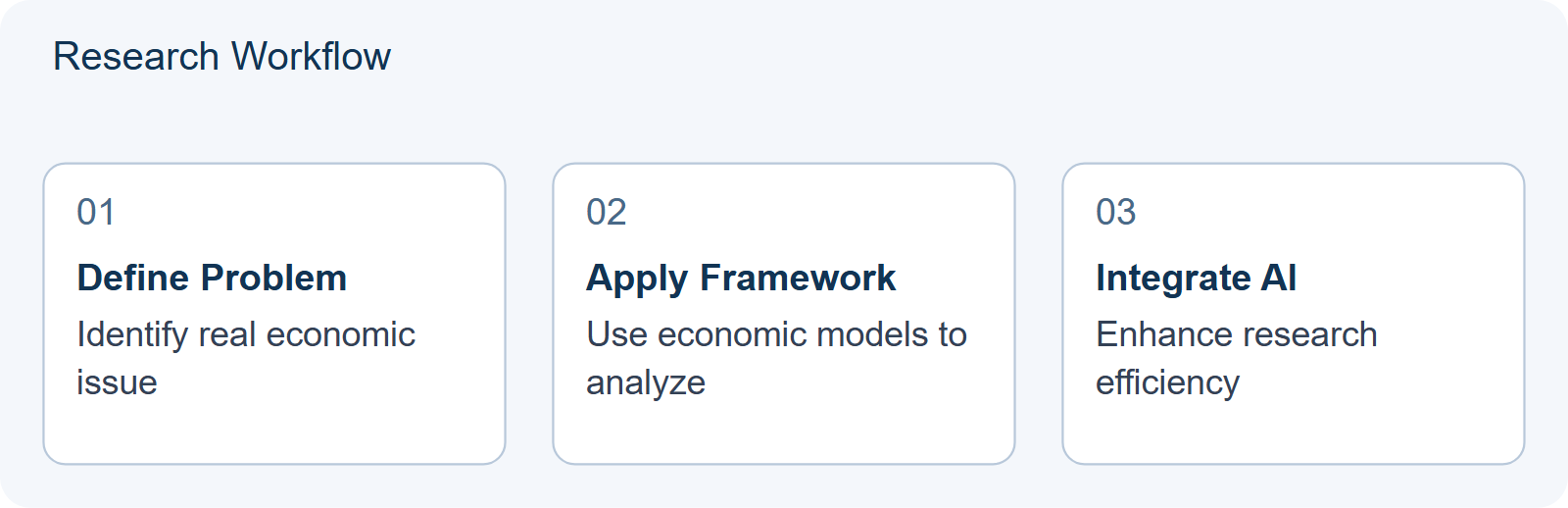
Unlike the Pre, DR, and AS divisions which primarily test knowledge through written exams and critical thinking essays, the Herbert Simon Division focuses on applied research. The core objective is to evaluate a student’s ability to identify an economic problem, apply appropriate frameworks, and use evidence to support conclusions—with AI serving as a tool to enhance efficiency and depth. This shift moves the competition from pure recall to practical application, mirroring how economists work in professional settings today.
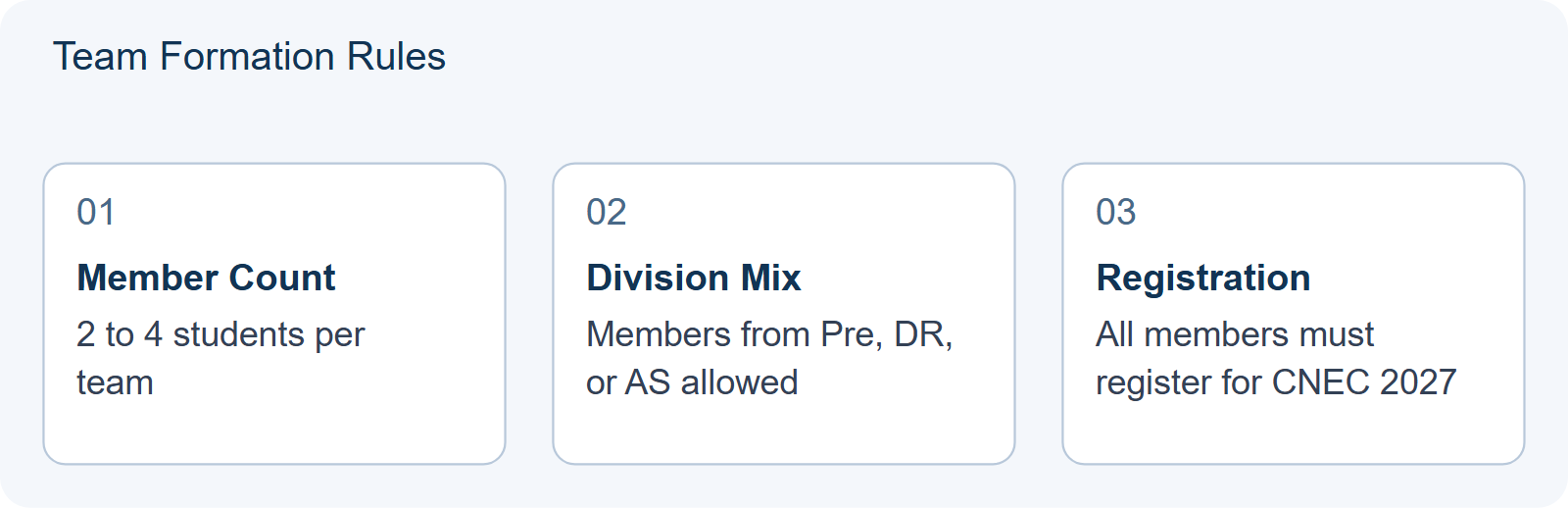
Teams in this division consist of 2–4 members. A unique feature is that these members can come from any existing CNEC division (Pre, DR, or AS), allowing for diverse skill sets within a single team. However, all members must be registered for CNEC 2027 and complete team formation by the registration deadline.
Key Assessment Criteria
The evaluation rubric for the Herbert Simon Division centers on five specific capabilities. First, students must demonstrate the ability to discover and define a genuine economic issue. Second, they need to apply standard economic frameworks to analyze this issue. Third, conclusions must be supported by credible evidence. Fourth, the effective use of AI to advance the research process is assessed. Finally, students must reflect on their research methodology and AI usage, showing awareness of limitations and ethical considerations.
| Component | Focus Area | Student Action |
|---|---|---|
| Problem Definition | Real-world relevance | Identify a specific economic question |
| Framework Application | Economic theory | Use models like supply/demand or externalities |
| Evidence & Conclusion | Data integrity | Support claims with verifiable data |
| AI Integration | Tool efficiency | Leverage AI for analysis, not just generation |
| Reflection | Process awareness | Critique own methods and AI outputs |
How Does It Fit Into the Competition Structure?
The Herbert Simon Division operates within the broader CNEC framework. Students typically start at the Preliminary stage, progress to the National Round, and potentially advance to the Global Round. While the source material highlights Singapore as a new global site with a strong focus on “AI × Business,” it does not explicitly restrict Herbert Simon teams to this location alone. The global stage includes sites in the US, UK, Hong Kong, and Singapore. Therefore, teams should prepare for a high-level presentation and defense of their research project, regardless of the specific geographic venue assigned during the advancement phase.
For those interested in the technical aspects of the earlier rounds, reviewing resources on CNEC 2027 Preliminary Slots can help manage time effectively. Additionally, strengthening foundational economic concepts remains vital, even for the AI track. Articles on Consumer Choice and Market Failure provide essential theoretical grounding that will strengthen your research proposals.
Is This Track Right for Your Team?
This division suits students who enjoy open-ended inquiry over multiple-choice testing. If your team has strong collaborative skills, curiosity about technology, and a desire to tackle complex, ambiguous problems, the Herbert Simon Division offers a distinctive platform. However, it requires more self-directed research compared to the structured exam formats of other divisions. Teams should assess their comfort level with independent project management and their ability to critically evaluate AI-generated insights before deciding to participate.
Hypothetical Decision Scenario: Choosing a Research Topic for the Herbert Simon Division
To illustrate how to apply the assessment criteria when deciding if this track fits your team, consider a hypothetical scenario involving two student teams, Team Alpha and Team Beta. Both teams possess strong theoretical knowledge in microeconomics but differ in their approach to data handling and AI integration. The core decision they face is selecting a research topic that aligns with the division’s emphasis on applied research and critical reflection.
Team Alpha proposes analyzing “The Impact of Ride-Sharing Algorithms on Local Taxi Driver Income.” Their plan involves using an AI tool to scrape public forum posts from drivers to identify sentiment trends. They intend to use these qualitative insights to argue that algorithmic pricing creates unfair market distortions. While creative, this approach risks violating the “Evidence & Conclusion” criterion because scraped social media data lacks verifiable integrity and may not represent the broader economic reality. Furthermore, relying solely on AI for sentiment analysis without cross-referencing official transport authority statistics could lead to weak conclusions.
In contrast, Team Beta chooses to investigate “Price Elasticity of Demand for Electric Vehicles During Subsidy Phase-Outs.” They plan to use publicly available government sales data and combine it with an AI model to forecast demand shifts under different subsidy scenarios. Crucially, Team Beta intends to manually verify the AI’s predictions against historical case studies from other regions. This method directly addresses the “AI Integration” and “Reflection” criteria by treating AI as a predictive tool rather than a source of truth, while ensuring data integrity through official sources.
| Decision Factor | Team Alpha (Hypothetical) | Team Beta (Hypothetical) |
|---|---|---|
| Data Source | Unverified social media scraping | Official government sales records |
| AI Role | Primary generator of arguments | Predictive modeling aid |
| Evidence Strength | Subjective and anecdotal | Quantitative and verifiable |
| Reflection Potential | Low (hard to audit bias) | High (clear methodology limits) |
The decision changes based on the team’s ability to critically evaluate AI outputs. If a team cannot distinguish between AI-generated hallucinations and factual data, they will struggle with the “Reflection” component. Team Beta’s choice is superior not because the topic is more complex, but because it allows for rigorous verification. For prospective participants, ask yourself: Can we independently validate every major claim our AI tool produces? If the answer is no, the Herbert Simon Division may require too much self-directed technical oversight for your current skill set.
A reusable self-check for any proposed project is the “Auditability Test.” Imagine you must explain your entire research process to a skeptical judge who has never seen your code or data. Can you point to specific, external sources that confirm each step where AI was used? If your workflow relies heavily on black-box AI decisions without transparent input data, you are likely misaligning with the competition’s focus on evidence-based economic analysis. This test helps teams decide whether to proceed with a high-AI-dependency project or pivot to one with stronger foundational data.
Frequently Asked Questions
Can I join the Herbert Simon Division if I am already in the AS Division?
Yes. The Herbert Simon Division allows team members to come from any existing CNEC division, including Pre, DR, or AS. You must ensure all teammates are registered for CNEC 2027 and form the team by the deadline.
Does the Herbert Simon Division automatically go to the Singapore Global Round?
Not necessarily. While Singapore is a new global site focused on AI and business, the sources do not state it is exclusively for Herbert Simon teams. Advancement depends on performance in Preliminary and National rounds, leading to potential participation in various global sites (US, UK, HK, Singapore).
What is the main difference between this track and the Critical Thinking essay?
The Critical Thinking essay tests analytical writing under timed conditions. The Herbert Simon Division focuses on long-term research projects where you define a problem, use economic frameworks, and integrate AI tools to produce a comprehensive solution, emphasizing process and reflection.